
Australia's 2026 Gambling Advertising Reform: What Changes and When
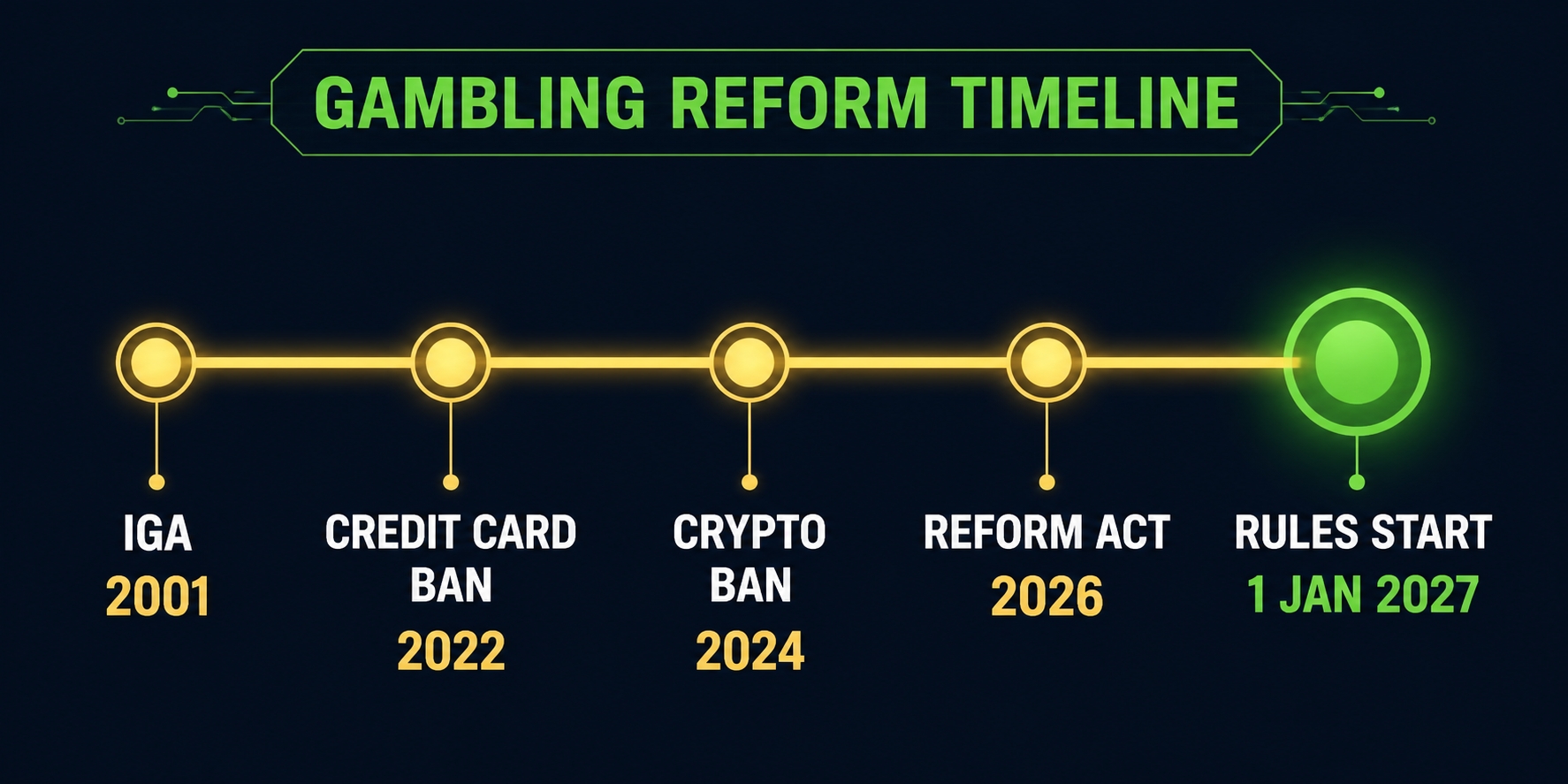
Parliament passed the Interactive Gambling Amendment (Gambling Reform) Act 2026 in August 2026 after a government–opposition deal; the new advertising rules commence on 1 January 2027, with a statutory review locked in after three years (The Conversation 2026; Parliament of Australia 2026). Prime Minister Anthony Albanese called it "the most significant gambling advertising reform by any Australian government ever" (The Conversation 2026). This explainer sets the measures against the timeline in the section's player-protection overview.
What Changes for Players
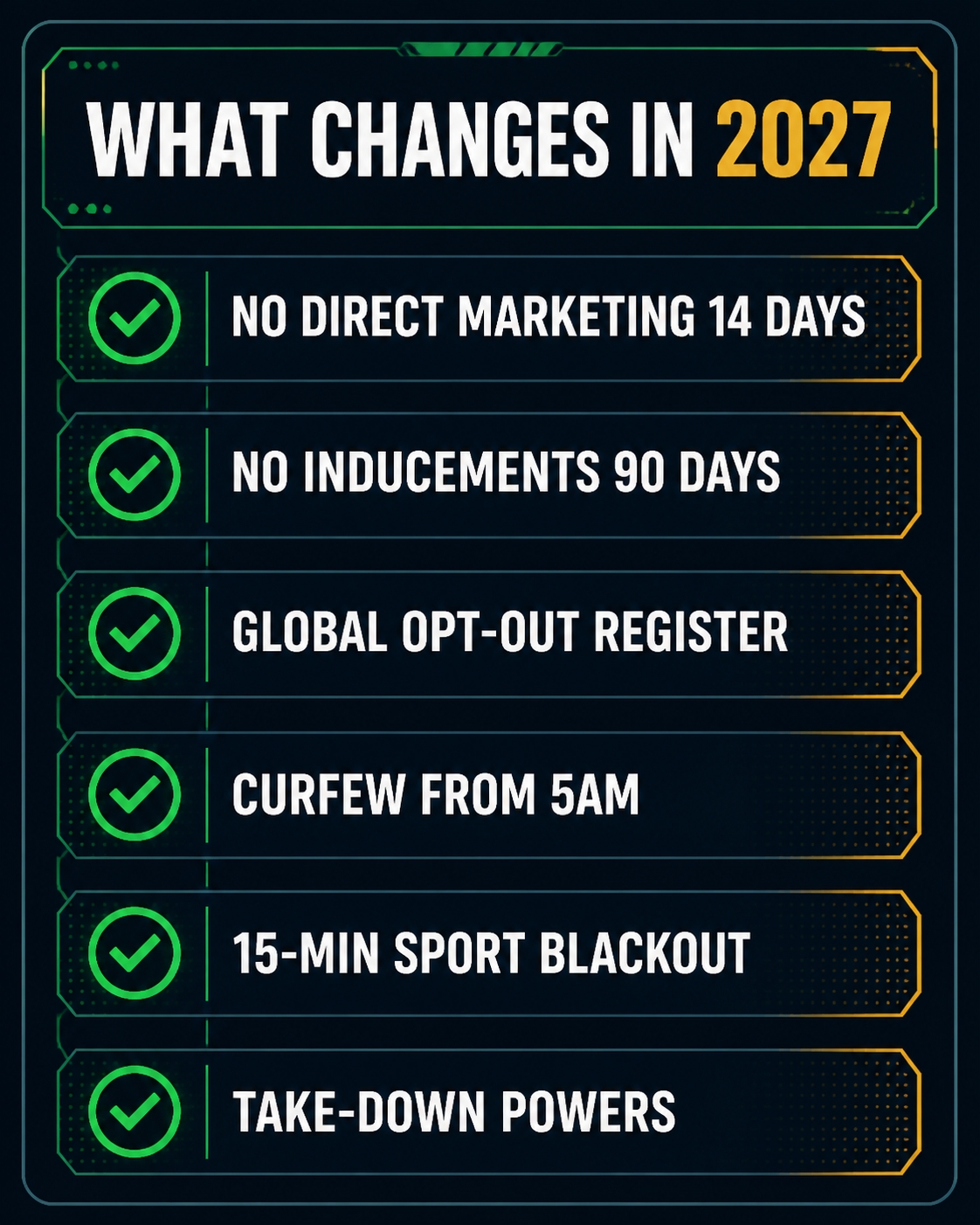
- No direct marketing for 14 days after account sign-up, and no inducements for 90 days after a person deregisters from BetStop (The Conversation 2026).
- Direct marketing to red-flagged customers is banned (The Conversation 2026).
- Gambling ads are outlawed in programming targeted at children (The Conversation 2026).
- A global opt-out register becomes mandatory for online advertisers, funded by the industry; the opt-out must be prominent, with tougher penalties when it is not (The Conversation 2026).
- Broadcast restrictions start at 5am instead of 6am; the live-sport blackout extends to 15 minutes before a game; targeted exceptions apply to racing simulcasts (The Conversation 2026).
- Commissions for any staff, agent or affiliate of gambling companies are banned; the ACMA gains take-down notice powers over illegal ads on social media (The Conversation 2026).
The Reform Timeline
| Date | Measure | Source |
|---|---|---|
| 2001 | Interactive Gambling Act bans online casinos for Australians | ACMA 2026a |
| November 2019 | First ACMA website-blocking requests | ACMA 2024 |
| 2022 | Credit cards banned in online wagering | ACMA 2024 |
| August 2023 | BetStop national self-exclusion register launches | DSS 2023 |
| 2023 | Murphy inquiry reports: full ad ban and national regulator recommended | ABC 2025 |
| 11 June 2024 | Digital currencies and crypto banned on licensed platforms | ACMA 2024; DITRDCA 2024 |
| August 2026 | Gambling Reform Act passes Parliament | The Conversation 2026; Parliament of Australia 2026 |
| 1 January 2027 | New advertising rules commence | The Conversation 2026 |
| 2029–2030 | Statutory review of the measures | The Conversation 2026 |
What the Reform Did Not Do
The statute phases in restrictions on advertising by licensed operators; it did not legislate the full online advertising ban or the national gambling regulator recommended by the 2023 Murphy inquiry — a gap the Alliance for Gambling Reform criticises, saying none of the inquiry's recommendations have been implemented (Australian Broadcasting Corporation [ABC] 2025). Independent MP Andrew Wilkie told Parliament: "Minor tweaks and piecemeal amendments to this bad bill won't address the wave of gambling harm washing over this country" (The Conversation 2026). Two Coalition members crossed the floor over the deal (The Conversation 2026). The three-year review will test whether the phased approach reduces harm at the pace the statistics demand.
Expert counsel. The global opt-out register is the player's most practical new right: the industry, not the taxpayer, funds its enforcement (The Conversation 2026) — the cost of ignoring an opt-out now lands on the advertiser.
FAQ
When do the new gambling ad rules start?
The legislation starts from 1 January 2027, with a statutory review after three years of operation (The Conversation 2026).
Does the reform ban all gambling advertising?
It phases in a comprehensive prohibition on advertising of licensed interactive wagering services, with targeted exceptions for racing broadcasts (Explanatory Memorandum 2026; The Conversation 2026).
Who pays for enforcing the opt-out register?
The gambling industry pays for the global opt-out register and for inducement enforcement (The Conversation 2026).
Sources
- Australian Broadcasting Corporation (ABC) 2025, Gambling participation and harm on the rise in Australia.
- Australian Communications and Media Authority (ACMA) 2024, ACMA blocks more illegal offshore gambling websites.
- Australian Communications and Media Authority (ACMA) 2026a, Investigations into online gambling providers.
- Department of Infrastructure, Transport, Regional Development, Communications and the Arts (DITRDCA) 2024, Credit cards now banned for online wagering.
- Department of Social Services (DSS) 2023, Thousands of Australians sign up to the new National Self-Exclusion Register.
- Parliament of Australia 2026, Interactive Gambling Amendment (Gambling Reform) Bill 2026, Bills digest.
- The Conversation 2026, Bipartisan deal on gambling includes a review after three years.
- Explanatory Memorandum 2026, Interactive Gambling Amendment (Gambling Reform) Bill 2026.